A HERE CITY site

Farm Succession Talk at Thanksgiving? Schedule It, Don’t Hold It: 5 Steps as 43 Million Acres Head for New Owners
Use the holidays to schedule a farm succession meeting, not hold one, says OSU's Shannon Ferrell. His 5 steps, plus USDA data on 43M acres changing hands.
Key takeaways
- Use Thanksgiving or Christmas to schedule a family meeting about the farm’s future, not to hold it, says Oklahoma State ag economist and attorney Shannon Ferrell.
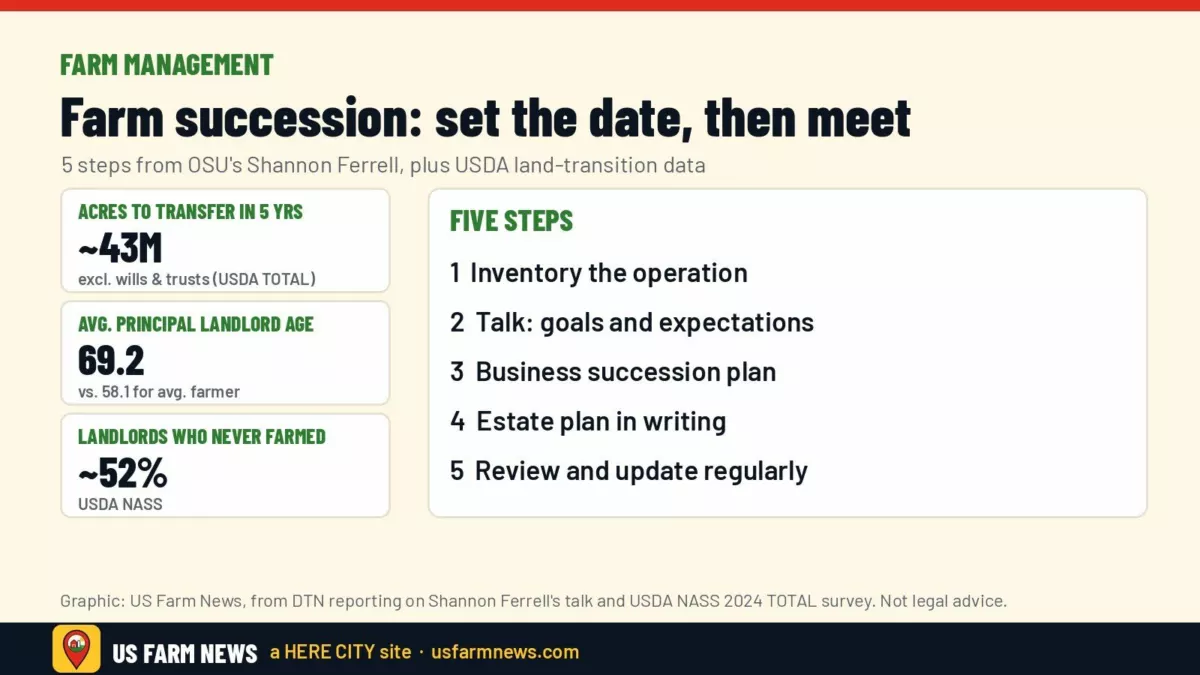
- About 43 million acres of U.S. farmland are expected to change hands in the next five years, not counting land going into wills or trusts, USDA’s 2024 TOTAL survey found.
- Principal non-operating landlords average 69.2 years old, and nearly 52% have never farmed, NASS said.
- Ferrell’s five steps: inventory, talk, build a business succession plan, put an estate plan in writing, and keep reviewing it.
Holiday gatherings are often the only time every generation of a farm family sits at the same table, so it’s tempting to settle the farm’s future over pie. Shannon Ferrell, an ag economist at Oklahoma State University who has practiced law for about 23 years, says that’s the wrong setting. His advice, given at a Kansas State University landowner conference and reported by DTN: set the date for a separate meeting while everyone’s together, then hold that meeting on its own.
Everyone slips back into childhood roles around the parents’ kitchen table, Ferrell explained, which makes it hard for an adult son or daughter to question the plan or admit they don’t want to farm. “I will allow you to schedule the meeting while you’re gathered together at Thanksgiving or Christmas, but not hold it there,” he said.
Why it matters to your bottom line
A transition that goes badly can do more damage to a farm balance sheet than a bad crop year. Without a plan, state inheritance law decides who gets what, which can leave several heirs owning undivided shares of the same land, some who want to keep farming and some who want to sell, Ferrell said. That can put a large share of the operation’s assets at risk.
The timing is pressing nationally. USDA’s National Agricultural Statistics Service said in March that its 2024 Tenure, Ownership and Transition of Agricultural Land (TOTAL) survey found:
- About 43 million acres, roughly 5% of U.S. farmland, slated for an ownership transfer within five years, excluding land in or headed into wills and trusts.
- Of that, 23 million acres expected to sell to a non-relative and 20 million to go to a relative by sale or gift.
- 348 million acres rented out by more than 2.0 million landowners, with 79% of those acres owned by landlords who don’t farm.
- Principal landlords with an average age of 69.2, compared with 58.1 for the average farmer in the 2022 Census of Agriculture. Only 12% were under 55.
DTN, citing the same survey, reported that landlords 65 and older control 74% of rented farmland. If you rent ground, your landlord’s estate plan affects your farm, too.
“Equal” isn’t always “fair”
The hardest question is often how to treat a child who farms versus siblings with off-farm careers. “Treating everybody the same, I would argue, isn’t treating everybody fair,” Ferrell said. Land usually makes up 70% or more of a farm’s assets, so an even split can force the farming heir to borrow to buy out siblings, turning decades of equity back into debt.
Ferrell said he and colleagues ran thousands of simulations on an example farm earning about $170,000 a year on average, and none produced enough cash flow to support a full buyout. Arrangements such as gradual ownership transfers, treating land differently from other assets, or letting off-farm heirs stay invested did much better in those runs, according to DTN.
Five steps to start
Ferrell’s outline, as reported by DTN:
- Inventory the operation. List assets, who owns what and how, financial performance, and everyone with a financial or emotional tie to the farm.
- Talk. Hold deliberate family discussions about goals and expectations. Ask what each person wants and whether the next generation really wants to run the business.
- Build a business succession plan. Decide how ownership, management and day-to-day duties will shift, and when the younger generation takes control.
- Write the estate plan. Work with an attorney and other advisers on the legal documents that carry out those decisions.
- Keep reviewing it. Update as family, business and financial conditions change.
He cautioned that a will or trust by itself isn’t a succession plan. Buy-sell agreements can keep ownership inside the family when a partner dies, becomes disabled, divorces or goes bankrupt, and every arrangement should be documented, transparent and financially workable.
Practical tips for the meeting itself
- Pick a neutral place and a set agenda, separate from a holiday.
- Listen first. Hearing each person out doesn’t mean parents give up control of their own assets, Ferrell noted.
- Keep the senior generation involved. A plan shouldn’t strip the older farmer of purpose; find roles that let the next generation take on management.
- Bring in help when needed. For long-running family conflicts, Ferrell suggested a mediator or family counselor before tackling business and inheritance questions.
- Bring the numbers. Your year-end balance sheet and a 2027 cash-flow plan show whether a proposed transfer can actually be financed.
Ferrell also urged farmers to treat their own health as part of the plan, noting that farming is among the most dangerous industries; DTN cited Bureau of Labor Statistics data showing farm work’s accidental death rate runs over six times the all-industry average. “If you have any expectation of that next generation coming back, you owe them this conversation,” he said.
This article is general information, not legal, tax or financial advice. Estate and succession rules vary by state; work with an attorney, tax adviser and lender who know agriculture.
Frequently asked questions
Should we talk about the farm’s future at Thanksgiving?
Ferrell recommends using the holiday only to schedule a separate family meeting, so the conversation gets its own time and people can prepare.
Is a will enough?
No. Ferrell says a will or trust alone doesn’t amount to a farm succession plan; families also need a business plan for how ownership and management will transfer.
How much farmland is expected to change hands soon?
USDA’s 2024 TOTAL survey put it at about 43 million acres over five years, not counting land in or headed into wills and trusts.
Get the Daily Ag Business Briefing
Markets, policy and farm business in one free email each weekday.