A HERE CITY site

Judge Approves $7.25 Billion Roundup Settlement: Who’s Covered, How Payments Work and What It Means for Farmers
A Missouri judge approved Monsanto's $7.25 billion Roundup class settlement Nov. 20. Who's covered, how payments work and what it means for glyphosate users.
Key takeaways
- A St. Louis judge on Nov. 20 gave final approval to a $7.25 billion class deal that resolves Roundup cancer claims nationwide, both existing and future ones.
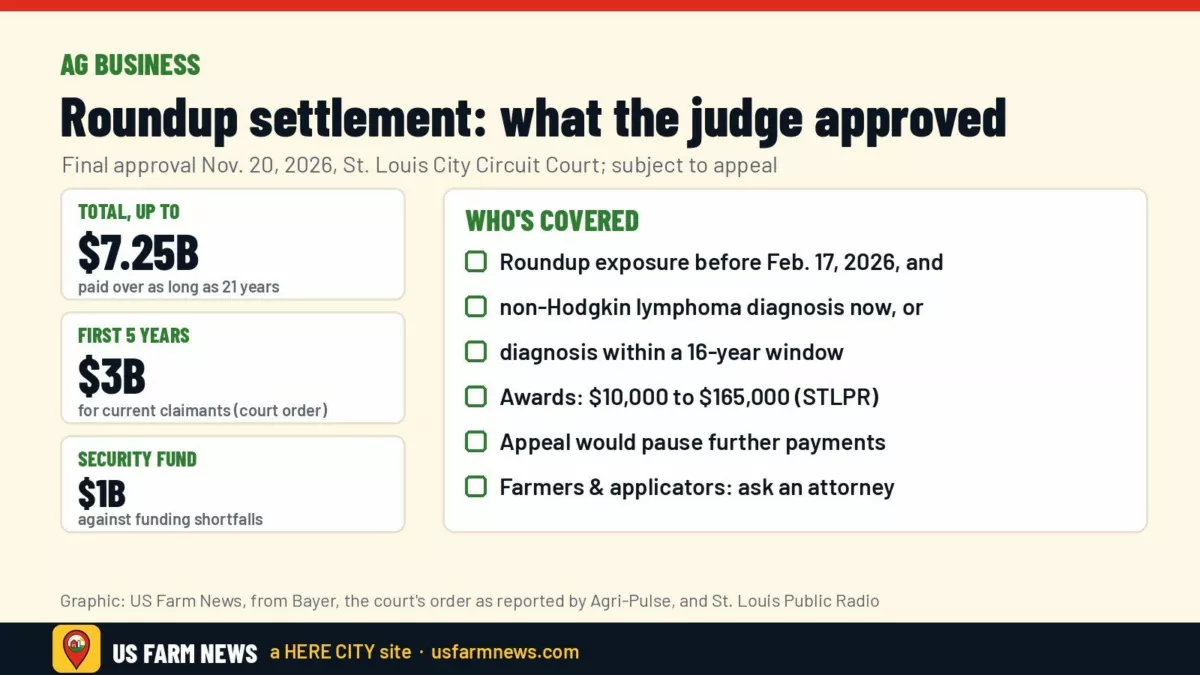
- It covers people exposed to Roundup before Feb. 17, 2026 who have non-Hodgkin lymphoma now or are diagnosed within a 16-year window; individual awards range from $10,000 to $165,000, St. Louis Public Radio reported.
- Monsanto will pay in declining, capped yearly amounts over as long as 21 years; an appeal would pause further payments, Bayer said.
- For farms, the ruling lowers the legal cloud over glyphosate’s main U.S. maker but doesn’t change how the herbicide is labeled or sold.
A Missouri state judge on Friday approved the $7.25 billion class settlement Bayer’s Monsanto unit negotiated to resolve both pending and future claims that its Roundup weed killer causes non-Hodgkin lymphoma, or NHL. St. Louis City Circuit Judge Timothy Boyer rejected the objections filed against the deal and found no sign of collusion, according to Agri-Pulse.
Bayer CEO Bill Anderson called the order “a decisive milestone in the company’s strategy to mitigate the risks of both pending and future Roundup litigation.” Christopher Seeger, a lawyer for the plaintiffs, said in a statement reported by St. Louis Public Radio that the order “delivers guaranteed compensation” to people who have waited more than a decade.
Why it matters to farmers
Glyphosate ranks among the most widely used pesticides anywhere, a Courthouse News Service report republished by No-Till Farmer noted, and Monsanto has been fighting tens of thousands of lawsuits over it since before Bayer paid $63 billion to acquire it in 2018, Agri-Pulse noted. A deal that caps and stretches out the bill gives the herbicide’s best-known maker more financial certainty. Bayer called glyphosate-based products “critical tools” that farmers rely on.
The ruling has a second, more personal angle. Farmers, custom applicators and farm employees are among the people most likely to have used Roundup for years. Anyone exposed before Feb. 17, 2026 who has an NHL diagnosis, or who gets one during the coverage window, falls within the settlement class unless they opted out, according to Bayer’s description of the program.
What the settlement includes
- Total: up to $7.25 billion, counting payments already made, paid by Monsanto in declining, capped annual amounts for up to 21 years, Bayer said.
- Two groups: people diagnosed now (subclass 1) and people who receive a diagnosis within 16 years after the agreement takes effect (subclass 2).
- Early money: Boyer’s order says counsel for current claimants secured $3 billion in funding during the first five years plus faster payment options for some claimants, Agri-Pulse reported.
- Protections for future claimants: funding that runs for years, inflation adjustments, protection if bankruptcy occurs and the right to exit the program later, according to the order.
- Award range: $10,000 to $165,000 per person, depending on circumstances, plus a separate $1 billion security fund against shortfalls and more than $400 million set aside for people with special circumstances, St. Louis Public Radio reported.
- No admission: Bayer says the agreement contains no admission of liability or wrongdoing.
How the case got here
The settlement was first announced in February, according to St. Louis Public Radio. In June, the U.S. Supreme Court ruled 7-2 in the Durnell case that federal pesticide law (FIFRA) preempts state-court claims that a product failed to warn users, Agri-Pulse reported. Boyer said failure-to-warn had been the main legal theory behind the Roundup suits, and he cited that ruling in finding the deal adequate.
The judge also pointed to the backlog. He wrote that Missouri courts alone hold more than 30,000 Roundup cases, while “just over 200 plaintiffs have trial dates,” making a trial impossible for most claimants in the foreseeable future.
On Oct. 29, a Missouri jury returned a unanimous verdict for Monsanto in Aretino v. Monsanto, the first Roundup trial since Durnell, in which plaintiffs pressed design-defect, fraud and negligence claims instead, according to a High Plains Journal report republished by No-Till Farmer.
What it doesn’t change
The ruling settles injury claims. It doesn’t alter EPA’s registration of glyphosate or what’s on the label, and nothing in the order affects how you buy or apply the product this winter. Federal policy has also leaned toward keeping glyphosate available: a Feb. 18 executive order tasked the agriculture secretary with ensuring a continued and adequate supply, according to a Daily Caller report republished by No-Till Farmer.
Weed resistance is a separate problem the settlement does nothing to solve. If you’re planning 2027 programs, see our look at the new Group 12 option for waterhemp and Palmer amaranth.
What to watch
- Appeals: the order can be appealed, and Bayer says any appeal would halt further Monsanto payments until it is resolved.
- Opt-outs: Bayer expects the number of people who left the class to be “manageable” and says those who sue will face a tougher road after Durnell.
- Claims process: people who think they qualify should talk with an attorney about deadlines and documentation.
This article is general information, not legal advice. If you or a family member or employee has an NHL diagnosis and used Roundup, consult a lawyer about your options.
Frequently asked questions
Who is covered by the Roundup settlement?
People who allege Roundup exposure before Feb. 17, 2026 and either have a non-Hodgkin lymphoma diagnosis now or receive one within a 16-year period after the agreement takes effect, according to Bayer.
How much could someone receive?
St. Louis Public Radio reported awards ranging from $10,000 to $165,000, depending on circumstances.
Will Roundup still be sold to farmers?
The settlement resolves injury claims and doesn’t change glyphosate’s EPA registration or labeling.
Get the Daily Ag Business Briefing
Markets, policy and farm business in one free email each weekday.