A HERE CITY site

Congress Returns With 6 Weeks Left: Farm Bill and E15 Hinge on a One-Year vs. Two-Year SNAP Fight
Lawmakers are back with funding expiring Dec. 11. A farm bill and year-round E15 depend on settling how long states get before sharing SNAP costs.

Key takeaways
- Congress opens its lame-duck session Monday, Nov. 9, and is scheduled to adjourn Dec. 18, with government funding running out Dec. 11.
- The farm bill hinges on one fight: Republicans offer a one-year delay in state SNAP cost-sharing, while Democrats want at least two years.
- If that deal fails, nationwide year-round E15 could stall with it, Agri-Pulse reported.
- Senate Ag holds a hearing Tuesday at 10:30 a.m. ET on Gregory Ibach’s nomination as USDA’s trade undersecretary.
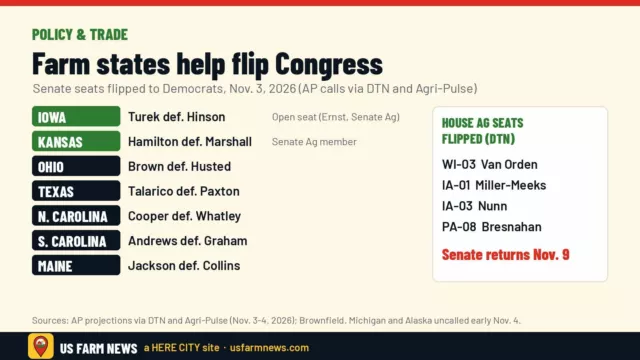
Lawmakers return to Washington today for what may be the last real chance to pass a farm bill before a Democratic majority takes over both chambers in January. The window is short and the to-do list is long, and farm-state leaders on both sides say a single dispute over food-assistance funding will decide whether ag gets anything done this year.
Agri-Pulse counted only a little over four weeks of legislative working days on the calendar. Brownfield reported that Congress plans to adjourn Dec. 18, and a stopgap spending law that keeps the government open expires Dec. 11, so a funding deal will compete with the farm bill for floor time.
Why it matters to your operation
A new farm bill would update the commodity, conservation and credit programs farmers plan around, and it could also carry nationwide year-round sales of E15, a top priority for corn growers. Agri-Pulse reported that without a deal on food assistance, the bill is unlikely to move and E15 would be thrown into doubt. Lobbyist Randy Russell of The Russell Group told Brownfield it is still too early to know whether any additional farm aid will ride on year-end legislation.
For farmers making 2027 plans, that means the program rules you are budgeting on today may stay in place a while longer. If the bill slips into next year, a new Congress with Democrats holding the committee gavels would take it up.
The sticking point: who pays for SNAP, and when
The Senate Agriculture Committee has approved a farm bill, but it has been stuck over how long certain states get before they must help pay for benefits in the Supplemental Nutrition Assistance Program, the nation’s largest anti-hunger program. The cost shift was written into last year’s One Big Beautiful Bill Act and is tied to each state’s payment error rate. Republicans say the requirement pushes states to get error rates below 6%; Democrats say states that start owing benefit costs in 2027 need time to budget for them, according to Agri-Pulse.
- Republican offer: Sen. John Boozman, R-Ark., who chairs the Senate Agriculture Committee, has called a one-year postponement the final offer, Agri-Pulse reported.
- Democratic ask: Sen. Amy Klobuchar of Minnesota, the committee’s top Democrat, wants at least two years. Klobuchar won the Minnesota governor’s race last week, and her state is among those due to start paying next year.
- Already in effect: On Oct. 1, the federal share of states’ SNAP administrative costs dropped from 50% to 25%, Agri-Pulse noted.
In an interview with Brownfield late last week, Boozman sounded open to movement but did not say whether he would now accept two years. “We’re willing to compromise and do whatever we need to do, working with our friends on the other side,” he said. Boozman told Brownfield that E15 and California’s Proposition 12 animal-housing law are also part of the talks among the four Agriculture Committee leaders, that Majority Leader John Thune wants a farm bill finished and that President Trump supports reaching an agreement.
Russell, speaking to Agri-Pulse, put the odds of passage at “very good” if new leaders in both parties and the White House agree to be productive for the rest of this Congress. But he expects Democrats, fresh off big wins, to hold firm on two years. “Obviously, the SNAP error rate issue is going to have to be resolved,” he said.
The House bill problem
Even a SNAP deal would not settle everything. The House passed its version in late April, but that bill does not include a SNAP delay and carries language to override state animal-welfare rules such as Prop 12, which Agri-Pulse described as a nonstarter in the Senate, where most bills need 60 votes to advance.
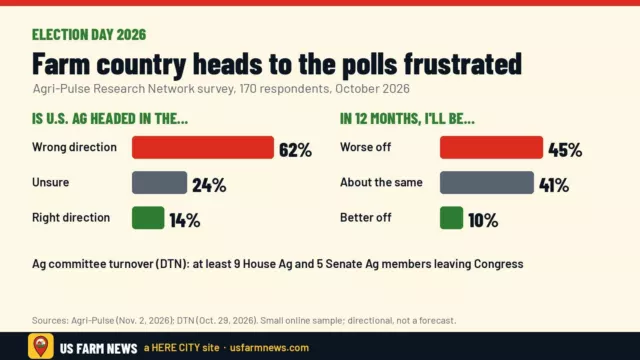
We covered the election’s shake-up of the Agriculture Committees in our post-election farm bill outlook, and the earlier House and Senate split on fuel in our E15 coverage.
What else is on the ag agenda this week
- Tuesday, 10:30 a.m. ET: The Senate Agriculture Committee holds a hearing on Gregory Ibach’s nomination as USDA undersecretary for trade and foreign agricultural affairs, along with Farm Credit Administration nominees, Agri-Pulse reported.
- Tuesday, noon ET: USDA releases its November crop production and WASDE supply-and-demand reports. See our WASDE preview.
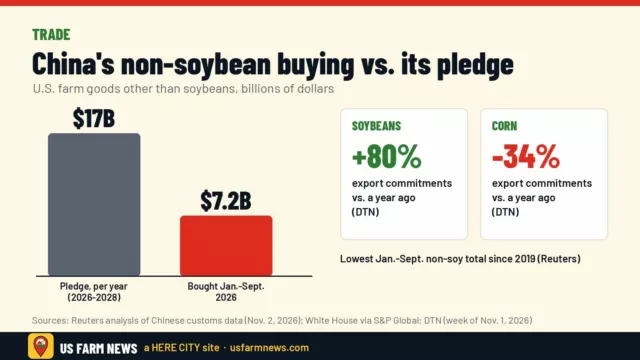
- Trade: Democrats are expected to use the session to shape next year’s trade agenda. Bills from Sen. Ron Wyden, D-Ore., and from Sens. Maria Cantwell, D-Wash., and Chuck Grassley, R-Iowa, would require Congress to approve or reject tariffs, according to Agri-Pulse.
- Uncalled races: Several contests remain open, including Sen. Cindy Hyde-Smith’s reelection bid in Mississippi. She sits on the Senate Agriculture Committee.
What to watch
The first signal will be whether committee leaders announce a SNAP compromise soon. Without one, Agri-Pulse reported, the farm bill is unlikely to move, and E15’s path would get harder too. With the Dec. 11 funding deadline arriving first, any farm deal also has to fit around the spending fight before the scheduled Dec. 18 adjournment.
Get the Daily Ag Business Briefing
Markets, policy and farm business in one free email each weekday.