A HERE CITY site

Wheat Falls to Its Lowest Since June Ahead of Russia-Ukraine Talks as Weekly Exports Hit a 1983-Record Low
Wheat touched a four-month low before Nov. 10-11 peace talks, while weekly U.S. shipments of 75,400 tons were the smallest on record. What to watch next.

Key takeaways
- Wheat futures fell as much as 2.4% to their lowest intraday level since June 30, Bloomberg reported, as traders braced for U.S.-led Russia-Ukraine talks.
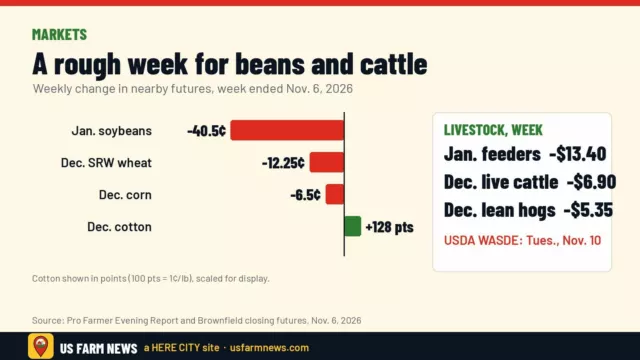
- December Chicago wheat settled Friday at $5.91¼, down 8 cents, according to Brownfield.
- U.S. wheat export shipments for the week ended Oct. 29 were just 75,400 metric tons, the smallest weekly total in records going back to 1983.
- U.S.-mediated talks are scheduled for Nov. 10–11 in Abu Dhabi, starting the same day USDA’s November WASDE comes out.
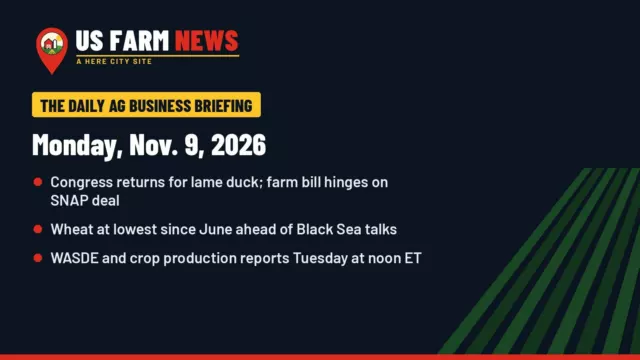
Wheat growers head into a big week with prices at four-month lows and export business at a crawl. Futures slid late last week to the weakest intraday level since the end of June as traders priced in the chance that U.S.-mediated talks between Russia and Ukraine could ease the war’s grip on Black Sea grain trade, Bloomberg reported.
Bloomberg said futures fell as much as 2.4% before trimming the loss. Brownfield’s closing report had December Chicago wheat at $5.91¼ on Friday, down 8 cents on the day, with fund and technical selling adding to the week’s losses.
Why it matters to your farm
Russia and Ukraine are two of the world’s biggest wheat suppliers, and the war has damaged ports and disrupted their shipments. Any sign of a durable peace could put more competing wheat on the world market, which tends to weigh on U.S. prices. For farmers holding unpriced 2026 wheat, or planning 2027 sales from the winter crop now in the ground, that is a headline risk that can move the board before any deal is actually signed.
The analysts who spoke up are not convinced a breakthrough is near. In a note quoted by Bloomberg, the Hightower Report said the scheduled talks in Abu Dhabi “are pressuring prices and that is likely to continue for the next few sessions.” AgResource, in its own Friday note, said it “fears that ending the Russian/Ukraine war will be complex and more difficult than what President Trump indicates.” Brownfield’s market desk described the trade as taking a wait-and-see stance, noting that peace talk has come and gone before.
Exports are the bigger problem
Even without the talks, U.S. wheat has a demand problem. Shipments in the week ended Oct. 29 totaled about 75,400 metric tons, UkrAgroConsult reported, citing Barchart’s read of USDA inspection data. That was the lowest weekly figure since the data series began in 1983, and it was:
- 41.3% below the prior week
- 78.5% below the same week last year
- led by Mexico at about 38,600 tons and Taiwan at about 28,500 tons
Brownfield said wheat looks very oversold on the charts, but slow export demand is capping any bounce. Argentina and Ukraine have recently been more competitive than the U.S. on export prices, Brownfield’s grain desk added.
What’s happening abroad
Global supply signals are mixed. According to a weekly market recap from Wright on the Market:
- The IKAR agency trimmed its forecast of Russian wheat exports by 6% to 39.5 million tons, and the EU shaved its own wheat crop estimate slightly.
- Russia’s October wheat exports were its largest of the season at 2.9 million tons, but far below 5.4 million a year earlier, with rail congestion slowing movement.
- Argentina is bringing in a record wheat crop thanks to spring rains, but more rain at harvest could cut into yield and grain quality.
- The UN’s cereal price index dropped 4.5% in October and stands 12.6% below a year earlier.
The U.S. winter wheat crop
At home, 83% of the planned winter wheat acreage was planted as of Nov. 1, one point behind the five-year average, and 65% had emerged, about normal, according to USDA crop progress data summarized by UkrAgroConsult. Only 44% of the crop was rated good to excellent. U.S. flour mills ground 227 million bushels in July through September, down 4.4 million bushels from a year earlier.
For a look at how the dry fall and El Niño outlook could affect the crop, see our winter weather outlook.
What to watch this week
- Today, Nov. 9: USDA’s weekly export inspections and the afternoon Crop Progress report, with updated winter wheat planting and condition numbers.
- Nov. 10–11: Russia-Ukraine talks in the UAE. Headlines from the meetings could swing wheat in either direction.
- Nov. 10, noon ET: USDA’s November WASDE and Crop Production reports. Our WASDE preview covers what the trade expects for corn and soybeans.
- Thursday: Weekly Export Sales, the next test of whether buyers are coming back to U.S. wheat.
Settlement prices here come from Brownfield’s closing report; check CME Group for official settlements.
Get the Daily Ag Business Briefing
Markets, policy and farm business in one free email each weekday.