A HERE CITY site

USDA Cuts Corn Crop 141 Million Bushels and Trims Soybean Stocks to 300 Million in November WASDE
USDA cut corn yield to 179.6 bu. and the crop by 141 million bushels, while higher exports cut soybean stocks to 300 million. What it means for marketing.
Key takeaways
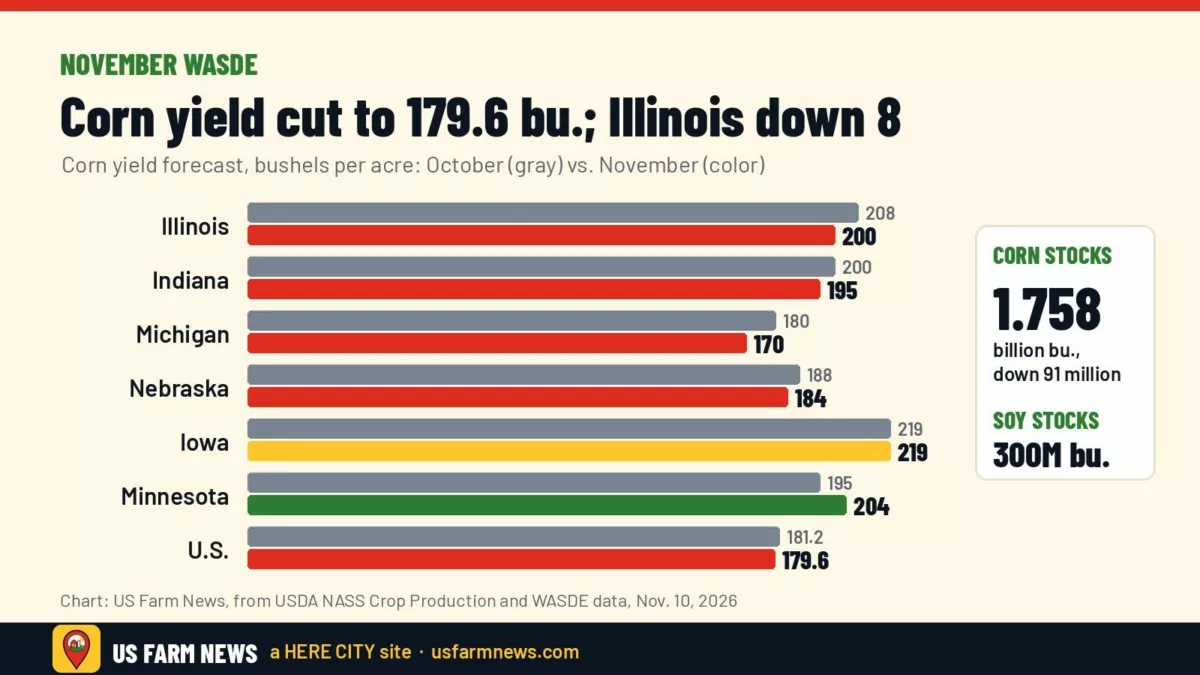
- USDA lowered the national corn yield estimate 1.6 bushels to 179.6 bushels per acre, trimming the crop by 141 million bushels to 15.893 billion.
- Soybean yield edged up to a record 53.3 bushels, but a 25 million-bushel boost to exports pulled projected ending stocks down to 300 million.
- Projected corn carryout fell to 1.758 billion bushels; USDA’s season-average price moved to $4.60 for corn and $12.10 for soybeans.
- Futures rallied: January soybeans gained 39¾ cents on Tuesday. The next WASDE is Dec. 10.
USDA’s November crop numbers gave grain markets the lift they had been waiting for. In reports released Tuesday, Nov. 10, the agency lowered its estimate of the U.S. corn crop for a second straight month on weaker yields in the eastern Corn Belt and tightened its soybean balance sheet by raising exports, even as it nudged the soybean yield to a new high.
For farmers still holding unpriced grain, the shift matters: smaller projected stockpiles of both crops gave futures their best day in weeks and put the downtrend in corn and soybean charts “in serious jeopardy,” in the words of Pro Farmer’s technical analysis.
Corn: the crop shrinks, the carryout follows
The National Agricultural Statistics Service put the average corn yield at 179.6 bushels an acre, based on conditions as of Nov. 1. That is 1.6 bushels below its October figure and 6.9 bushels under last year. With harvested area unchanged at 88.5 million acres, production fell to 15.893 billion bushels. NASS said that would still be the second-largest corn crop on record.
The losses were concentrated in a handful of big states, according to the NASS state tables:
- Illinois: 200 bushels, down from 208 in October
- Indiana: 195, down from 200
- Michigan: 170, down from 180
- Nebraska: 184, down from 188
- Iowa: unchanged at 219
- Minnesota: 204, up from 195
On the use side, the WASDE lowered feed and residual use by 25 million bushels to 5.975 billion and cut exports by the same amount to 3.275 billion. Ethanol use held at 5.65 billion. Because the crop cut was larger than the demand cuts, projected 2026-27 ending stocks dropped 91 million bushels to 1.758 billion. USDA still lowered its season-average farm price by a dime to $4.60, a reflection of the export downgrade.
Brownfield noted that export demand for U.S. corn has slowed sharply on price and ample world supplies, even as Mexico announced purchases on three straight business days, including 312,700 metric tons on Tuesday.
Soybeans: record yield, but exports tighten the math
NASS raised the soybean yield 0.2 bushel to 53.3 bushels an acre, which it called a record, and lifted production 12 million bushels to 4.574 billion. Iowa rose 2 bushels to 65, Minnesota jumped 5 to 54 and Nebraska gained 3 to 62, while Illinois slipped 4 bushels to 64 and Kansas fell to 30.
Brownfield said both the yield and production came in below what traders expected before the report. At the same time, USDA raised projected exports 25 million bushels to 1.72 billion. Crush stayed at 2.78 billion. Ending stocks fell 15 million bushels to 300 million, and the season-average price rose 10 cents to $12.10. Brownfield tied the export increase largely to expectations for Chinese buying, adding that other buyers will also need to step up. For background on the trade picture, see our report on China’s extended tariff pause and the soybean duty.
Globally, USDA left Brazil’s soybean crop at 186 million metric tons and Argentina at 50 million, DTN reported, and held China’s imports at 115 million tons, according to Brownfield.
Wheat: little change
The wheat balance sheet barely moved. Food use dipped 3 million bushels, nudging projected ending stocks up to 743 million, and the average farm price slipped 10 cents to $6.20. World wheat stocks rose to 280.82 million metric tons from 276.04 million. DTN Lead Analyst Rhett Montgomery called the U.S. numbers bullish for corn and soybeans and neutral for wheat.
How the market reacted
According to closing reports from 680 KFEQ and Pro Farmer, December corn settled up 9¾ cents at $4.49, January soybeans gained 39¾ cents to $12.28 and December Chicago wheat added 4¾ cents to $5.92¾. Brownfield attributed the moves to fund and technical buying. Official settlements are posted by CME Group.
What it means for your marketing plan
The report doesn’t change the basic picture of a big corn crop and slow corn exports, but it trims the cushion. A few points to weigh:
- Corn still has a large carryout. Even after the cut, 1.758 billion bushels is a sizable stockpile, and USDA lowered its price outlook. A rally gives a chance to review sales targets rather than a signal that the market has turned.
- Soybeans now lean on exports. The tighter balance sheet depends on the higher export forecast, so weekly sales data and any Chinese purchases will carry extra weight.
- Yields can still move. NASS said the forecasts were based on data collected before harvest was complete. It puts a 90% chance on final corn production landing between 15.5 billion and 16.3 billion bushels.
Before Tuesday’s report, USDA ran a new AI review of the data; we explained how that check works. Growers still finishing corn can also review our late-harvest crop insurance checklist.
What to watch
- Friday, Nov. 13, 8:30 a.m. ET: USDA Weekly Export Sales, pushed back a day by the Veterans Day holiday, according to USDA’s Foreign Agricultural Service.
- Friday, Nov. 13: Brazil’s CONAB crop update, which Brownfield flagged.
- Thursday, Dec. 10: USDA’s next WASDE and Crop Production reports.
Frequently asked questions
How big is the 2026 U.S. corn crop?
USDA’s Nov. 10 forecast is 15.893 billion bushels on a yield of 179.6 bushels per acre, down 141 million bushels from October.
Why did soybean ending stocks fall if the crop got bigger?
USDA raised projected exports by 25 million bushels to 1.72 billion, more than offsetting the 12 million-bushel production increase, so ending stocks fell to 300 million bushels.
When is the next WASDE report?
Brownfield said USDA’s next supply, demand and production estimates come out Dec. 10.
Get the Daily Ag Business Briefing
Markets, policy and farm business in one free email each weekday.