A HERE CITY site

Veteran Farmers: The USDA Crop Insurance, Loan and Program Benefits You Can Claim, as USDA Names a New Veterans Liaison
Veteran farmers can get 10 extra points of crop insurance subsidy, fee waivers and FSA loan preferences. A Veterans Day guide to who qualifies and how.
Key takeaways
- USDA named Army veteran Richard Lopez as its new Military Veterans Agricultural Liaison on Nov. 10, a point person for veterans seeking farm loans, grants and business help.
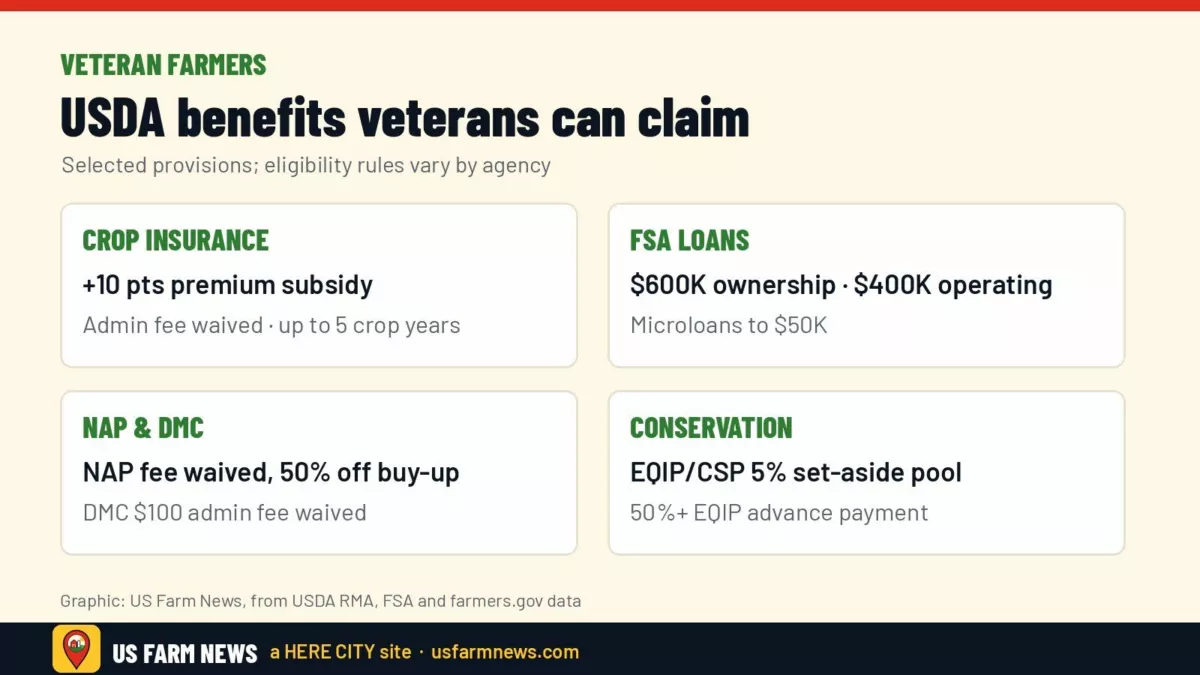
- Qualifying veterans get 10 extra percentage points of crop insurance premium subsidy on buy-up policies, waived admin fees and other help for up to five crop years.
- FSA direct farm ownership loans go up to $600,000 and direct operating loans up to $400,000; microloans top out at $50,000.
- Veterans also get fee waivers and ranking help in programs such as NAP, Dairy Margin Coverage, EQIP and CSP. This is general information, not legal, tax or financial advice.
On the eve of Veterans Day, USDA used a Nov. 10 event with the Department of Veterans Affairs and the Small Business Administration to name a new point person for veterans who want to farm. Richard Lopez, an eight-year Army veteran who worked in intelligence and left as a staff sergeant, is USDA’s new Military Veterans Agricultural Liaison. USDA said he will help veterans find loans, grants and business-planning help across the department. He previously worked as a regional beginning farmer and rancher coordinator at the Farm Service Agency.
The appointment is a good prompt for any veteran farming now, or thinking about it, to check whether they are claiming the benefits written into federal farm programs. Many of them only apply if you ask. Here is a plain-language rundown built from USDA’s own program pages.
First, do you qualify as a “veteran farmer”?
The definition varies by agency, which trips people up:
- General USDA definition: Farmers.gov says it covers anyone who served in any of the six armed services, reserve components included, and was not dishonorably discharged.
- FSA and NRCS: Either your farming career is under 10 years old or you became a veteran within the past decade.
- Crop insurance (RMA): The window is shorter. Farmers.gov says you must have become a veteran in the last five years; RMA’s rules list the full set of tests.
- Entities: For crop insurance, every substantial beneficial interest holder must qualify. RMA says a business made up only of a veteran and spouse still qualifies even if the spouse isn’t a veteran, but a corporation formed with a longtime-farming parent would not.
Crop insurance: the benefit people miss
According to the Risk Management Agency, a qualifying veteran farmer or rancher gets:
- 10 percentage points more premium subsidy on subsidized buy-up policies.
- No administrative fee on catastrophic (CAT) or buy-up policies.
- Permission to use a previous producer’s production history, with their consent, on acreage transferred to you, if you were involved in that farm’s decisions or work.
- A higher substitute yield when replacing a disaster-hit year in your history: 80% of the county transitional yield instead of 60%.
Veteran benefits last up to five crop years. If you also qualify as a beginning farmer, RMA applies the beginning farmer benefits instead, because they are equal or larger and last up to 10 years. You can’t collect both at once. To apply, you fill out a beginning/veteran farmer application with your crop insurance agent and provide military records showing active service and discharge, RMA said.
FSA farm loans
FSA is a lender of first opportunity for producers who can’t get credit elsewhere at reasonable terms. Its published loan limits, according to an FSA presentation for beginning farmers and veterans:
- Direct farm ownership: up to $600,000, with terms of up to 40 years, for land, buildings and improvements.
- Direct operating: up to $400,000 for livestock, equipment and production costs.
- Microloans: up to $50,000 each for operating and farm ownership, with a shorter application.
Farmers.gov lists veteran-specific advantages: when funding is short and two applications arrive the same day, a veteran’s gets preference; military leadership or management experience can count toward one of the three years of farm management experience required for a direct loan; and microloans to veterans don’t count against the term limits on FSA direct loans. Rates change monthly; see our guide to November FSA loan rates.
Other programs with veteran provisions
Farmers.gov lists several more:
- Noninsured Crop Disaster Assistance (NAP): waived service fee and a 50% premium reduction on buy-up coverage.
- Dairy Margin Coverage: the $100 annual administrative fee is waived.
- ARC and PLC: payments are allowed on farms with 10 base acres or fewer.
- ELAP: reimbursement of up to 90% of the cost of eligible livestock, honeybee and farmed-fish losses.
- EQIP and CSP: veterans share a 5% funding set-aside with beginning and socially disadvantaged producers, may get ranking priority and higher payment rates, and can get at least 50% of an EQIP practice payment up front.
- Value-Added Producer Grants: beginning farmer veterans get ranking priority.
For more on those two programs, see our ARC/PLC signup checklist.
Your next step
USDA recommends making an appointment at your local USDA Service Center and asking ahead of time which documents to bring. FSA suggests a current balance sheet, production and sales records, and projected income and expenses. Each state also has a beginning farmer and rancher coordinator who can connect you with veteran-focused groups, and USDA’s veterans page is usda.gov/veterans. For crop insurance, start with your agent.
This article is general information, not legal, tax or financial advice. Program rules and eligibility can change; confirm details with USDA, your crop insurance agent or a qualified adviser before making decisions.
Frequently asked questions
How much extra crop insurance subsidy do veteran farmers get?
RMA says qualifying veterans receive 10 more percentage points of subsidy on subsidized buy-up coverage, for up to five crop years.
Can I get both beginning farmer and veteran crop insurance benefits?
No. If you qualify for both, RMA applies the beginning farmer benefits because they are equal or higher.
What is the largest FSA direct farm ownership loan?
FSA lists a maximum of $600,000 for a direct farm ownership loan, with repayment terms of up to 40 years.
Get the Daily Ag Business Briefing
Markets, policy and farm business in one free email each weekday.