A HERE CITY site

USDA Proposes First Forest Service Grazing Rule Rewrite Since 1977: Leased Base Property, 5-Year Permits and a Leasing Surcharge
USDA's proposed grazing rule would let ranchers qualify with leased property, extend some permits to five years and add a leased-livestock surcharge.
Key takeaways
- USDA proposed the first rewrite of Forest Service grazing rules since 1977, covering national forests in 16 Western states and the national grasslands.
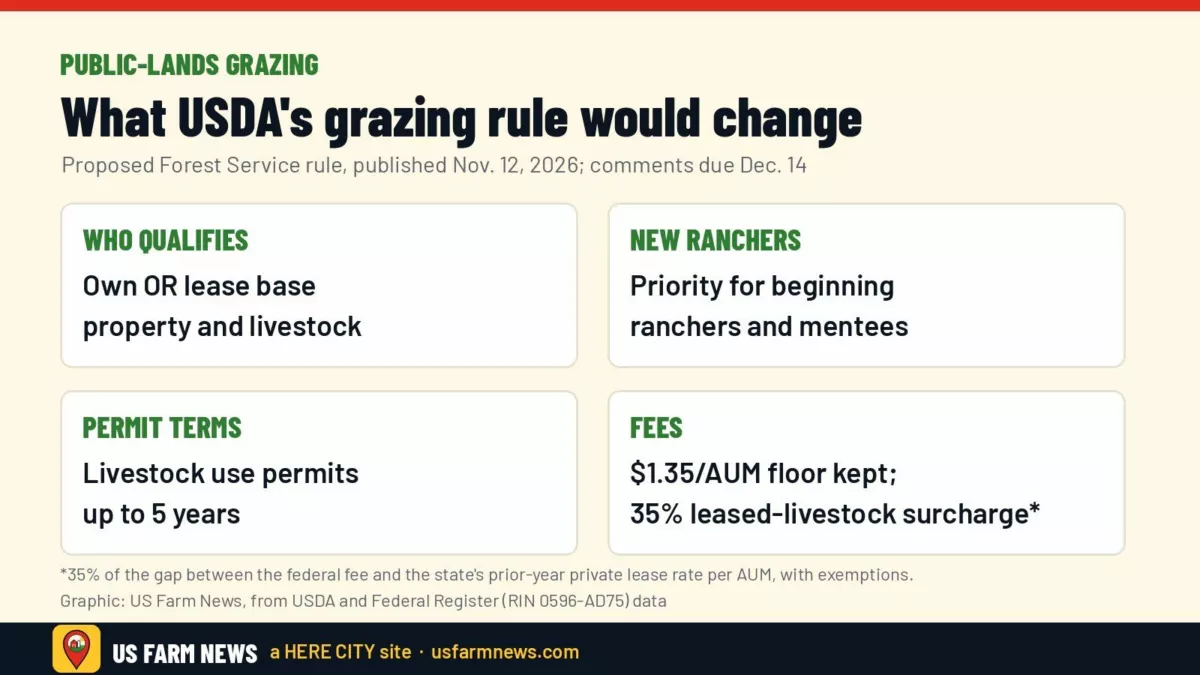
- The plan would let ranchers qualify with leased base property and livestock, give beginning ranchers priority for open forage and stretch livestock use permits up to five years.
- It keeps the federal fee formula and $1.35-per-AUM floor but adds a surcharge equal to 35% of the gap to private lease rates when a permittee grazes leased cattle.
- The Federal Register lists a comment deadline of Dec. 14, 2026.
Ranchers who run cattle or sheep on national forests and grasslands would see new rules on who can hold a grazing permit, how long some permits last and what it costs to graze livestock they don’t own, under a proposal USDA unveiled Nov. 10.
Interior Secretary Doug Burgum and Agriculture Secretary Brooke Rollins rolled out the plan jointly, pitching it as a way to cut paperwork and line Forest Service rules up with those of the Bureau of Land Management, which many permittees also graze. Western Ag Network reported it is the first proposed change to USDA’s grazing rules since 1977.
Why it matters to a ranch budget
Federal grazing is a big piece of the forage base for many Western cow-calf and sheep outfits. USDA said livestock graze nearly 40% of the Forest Service’s 193 million acres, and that grazing on those lands supports about 14,200 jobs and adds $645 million a year to the economy. Changes to eligibility, permit terms and fees feed straight into land, lease and herd-expansion decisions, especially with November feeder cattle futures settling above $330 per hundredweight on Tuesday, according to 680 KFEQ’s closing report.
What the proposal would change
The proposed rule text, posted by the Federal Register, lists ten substantive policy shifts. The ones most likely to affect day-to-day ranch decisions:
- Easier qualification: Applicants could qualify for a term grazing permit if they own or lease the base property and livestock, instead of having to own them. Base property could also include cropland and stockwater rights.
- Priority for newcomers: When new forage capacity opens and goes out by prospectus, beginning ranchers, mentees and small-business ranchers would get discretionary priority. Existing permittees keep first priority for renewal on their current allotments, the document says.
- Longer short-term permits: Livestock use permits could run up to five years. Western Ag Network said that compares with one year now, which means fewer renewals.
- Drought and wildfire framework: The rule would codify a planning process for responding to drought, fire and similar disturbances, and allow targeted or outcome-based grazing projects under temporary or livestock use permits.
- Anti-consolidation rules: Older permit-cap provisions would be replaced with what USDA calls a more flexible anti-consolidation framework.
Fees: same formula, plus a leasing surcharge
The base fee calculation would not change. The proposal writes the existing formula into one section covering both the Western national forests and the national grasslands, keeps the 25% cap on year-to-year changes and keeps the $1.35 per animal unit month (AUM) minimum.
The new cost is a surcharge for permittees who run livestock owned by someone else. It would be set at 35% of the gap between that year’s federal fee and the state’s private grazing lease rate per AUM from the year before, as measured by the National Agricultural Statistics Service, and would be paid before grazing. The proposal says this mirrors an existing BLM surcharge. Exemptions would cover livestock owned by documented mentees, beginning ranchers, permittee successors, family members and operators receiving relief after drought, fire or other natural events. USDA said the surcharge doesn’t ban leasing but may encourage permittees to run their own cattle.
For a permittee who regularly runs custom or leased cattle, the surcharge could be a meaningful new line on the grazing bill, because private forage costs much more than federal grazing. Western Watersheds Project, citing an analysis by ProPublica and High Country News, put the average federal discount at 93% versus private-land rates. The exact amount would depend on each state’s NASS lease rate.
Supporters and critics
Burgum said Interior has already extended BLM grazing permits up to 10 years and that longer terms give ranchers more certainty to invest in fencing and water, according to Western Ag Network. “America’s ranchers know how to manage the land. It’s our job to make it easier for them to do it,” he said in the USDA announcement.
Conservation groups objected. Western Watersheds Project said the changes would open more of the national forests to grazing and lock in a fee it considers far below market value. The group also noted that the Forest Service determined the rule falls under a categorical exclusion from detailed environmental review. USDA, for its part, said many of the revisions are editorial or procedural and that it doesn’t currently expect the rule to weigh heavily on most small ranching businesses, though it asked for comment on that question.
What to do now
- Read the sections that touch your permit. The proposed rule is docketed under RIN 0596-AD75 on Regulations.gov, which also posts a plain-language summary.
- Run the surcharge math if you graze leased or custom cattle, using your state’s private grazing lease rate.
- Talk with your district ranger or grazing association about how a five-year livestock use permit or the new drought framework could apply to your allotment.
- Comment by the deadline. The Federal Register lists Dec. 14, 2026. Western Watersheds Project cited Dec. 11, so filing early avoids any confusion.
Herd decisions also hinge on cattle markets; see our recent report on Tyson’s plans for its Amarillo beef plant and the latest livestock news.
Frequently asked questions
Which lands does the proposed grazing rule cover?
It applies to grazing on national forest lands. The consolidated fee section applies to national forests in 16 contiguous Western states plus the national grasslands.
Will the federal grazing fee go up?
The proposal keeps the existing fee formula and the $1.35-per-AUM floor. The new cost is a surcharge that applies only when a permittee grazes livestock owned by someone else, with exemptions.
How do I comment?
Comments go through Regulations.gov using RIN 0596-AD75. The Federal Register lists the deadline as Dec. 14, 2026.
Get the Daily Ag Business Briefing
Markets, policy and farm business in one free email each weekday.