A HERE CITY site

Screwworm Cases Climb to 116 as Fall Surge Outpaces Sterile Fly Supply
USDA counted 116 New World screwworm cases in Texas, New Mexico and Arizona by Nov. 5, with 66 active. What the surge means and what ranchers can do now.

Key takeaways
- USDA counted 116 confirmed New World screwworm cases in Texas, New Mexico and Arizona as of Nov. 5, with 66 active, Pro Farmer reported.
- Cases jumped from 3 in September to 36 in October, and about 30 more came in the first five days of November.
- USDA’s main tool, sterile fly releases, is capacity-limited: about 140 million flies a week from Panama and Mexico versus a historical need of about 500 million, per KBTX.
- A new sterile fly facility being built at South Texas’s Moore Air Base should be finished in April, USDA says.
New World screwworm detections in the Southwest are climbing quickly this fall. USDA data showed 66 active U.S. cases on Nov. 5 and 116 confirmed in total since the first U.S. detection in June, all in Texas, New Mexico and Arizona, according to Pro Farmer’s tally of USDA data. September produced just three cases. October produced 36, and about 30 more were logged in the first five days of November alone.
The flesh-eating parasite is a direct threat to cattle, sheep, goats and horses, and to the economics of any operation in or near the affected counties. USDA has said screwworm poses no food safety risk, KBTX reported, but untreated infestations can cause severe wounds and significant economic losses, CIDRAP noted.
Why it matters for cattle and small-ruminant producers
Screwworm larvae feed on living tissue in open wounds, so routine events like branding, castration, dehorning, calving and ear tagging all create exposure. With more cases showing up each week, producers in the infested zones face more time spent checking animals, more treatment costs and potential movement restrictions. Producers farther away should still pay attention: animals and flies don’t stop at county lines, and the response depends on early reports.
Where the cases are
High Plains Journal, citing USDA data, reported 61 animal cases in the 30-day period ending Nov. 4, more than half of everything recorded since June. Of those, 59 involved domestic animals, and 55 of those were classified as active. Recent USDA case reports listed detections in Greenlee County, Arizona; Eddy, Otero and Doña Ana counties in New Mexico; and Starr County, Texas, according to HPJ. KRGV reported that USDA confirmed two Starr County cases this week, one in a dog and one in cattle.
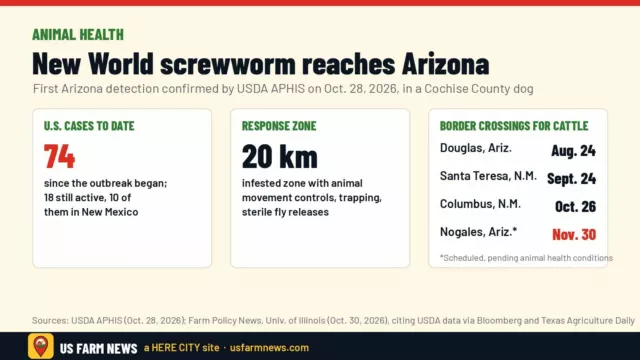
CIDRAP said the bulk of the detections sit close to the border with Mexico. Arizona confirmed its first case on Oct. 28, in a dog in Cochise County, which we covered in Arizona’s first screwworm detection. Confirmed cases have involved cattle, horses, sheep, goats, dogs, a cat, two elk and a chicken, per Pro Farmer.
Sterile flies: the bottleneck
Eradication depends on releasing sterile flies so wild flies can’t reproduce. Historically, eradicating the pest from the U.S. required releasing roughly 500 million sterile flies every week, KBTX reported. Current output is far below that: USDA puts the Panama facility at about 100 million flies weekly and the Mexico facility at about 40 million. Construction on a South Texas plant at Moore Air Base is scheduled to wrap up in April, and USDA hopes it will turn out 100 million flies by this time next year.
“Until we can get those production facilities ramped up at the max production level, we will continue to be in a response posture,” USDA Under Secretary Dudley Hoskins told KBTX. Texas A&M entomologist Aaron Tarone said milder fall weather is likely helping fly numbers. Texas A&M researchers are also testing electron beams as an alternative to the radioactive cobalt now used to sterilize flies; KBTX noted those results have not been peer reviewed and USDA says the method still has to be validated.
What producers can do now
- Check animals often, especially any with fresh wounds, navels on newborns or recent processing.
- Treat and protect wounds promptly, and talk to your veterinarian about approved products for your species.
- Report suspected cases fast. In Texas, call the Texas Animal Health Commission at 1-800-550-8242 for livestock and pets, or Texas Parks and Wildlife at 512-389-4505 for wildlife, KBTX reported. Other states should contact their state veterinarian.
- Look up your location on the state infested-zone maps linked from USDA’s screwworm site, which posts case updates Monday through Saturday, per HPJ.
Pet owners in the area have new options too: CIDRAP reported the FDA issued an emergency use authorization this week for Bravecto chewable tablets to treat screwworm infestations in dogs, adding to earlier authorizations.
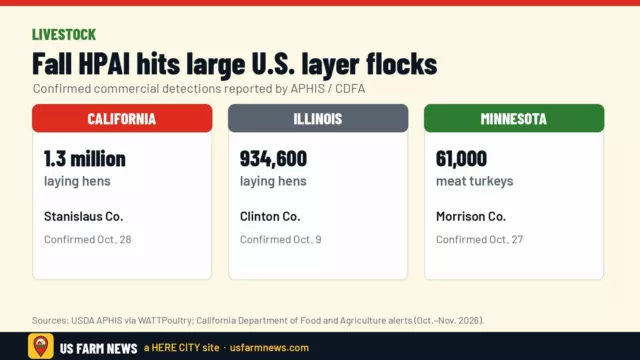
For more livestock disease risk this fall, see our report on bird flu in California layer flocks.
Frequently asked questions
Is screwworm a food safety risk?
No. USDA has said the pest poses no food safety risk, according to KBTX.
Which states have confirmed cases?
Texas, New Mexico and Arizona, with most detections near the Mexican border.
How do I report a suspected case in Texas?
Call the Texas Animal Health Commission at 1-800-550-8242 for livestock and pets, or Texas Parks and Wildlife at 512-389-4505 for wildlife.
Get the Daily Ag Business Briefing
Markets, policy and farm business in one free email each weekday.