A HERE CITY site

Iowa Corn Only 72% Harvested: Crop Insurance Duties to Know Before the Dec. 10 End of Coverage
Iowa corn is 72% harvested vs. an 89% average. Grain corn coverage generally ends Dec. 10; here's how to report damage and document a claim before then.
Key takeaways
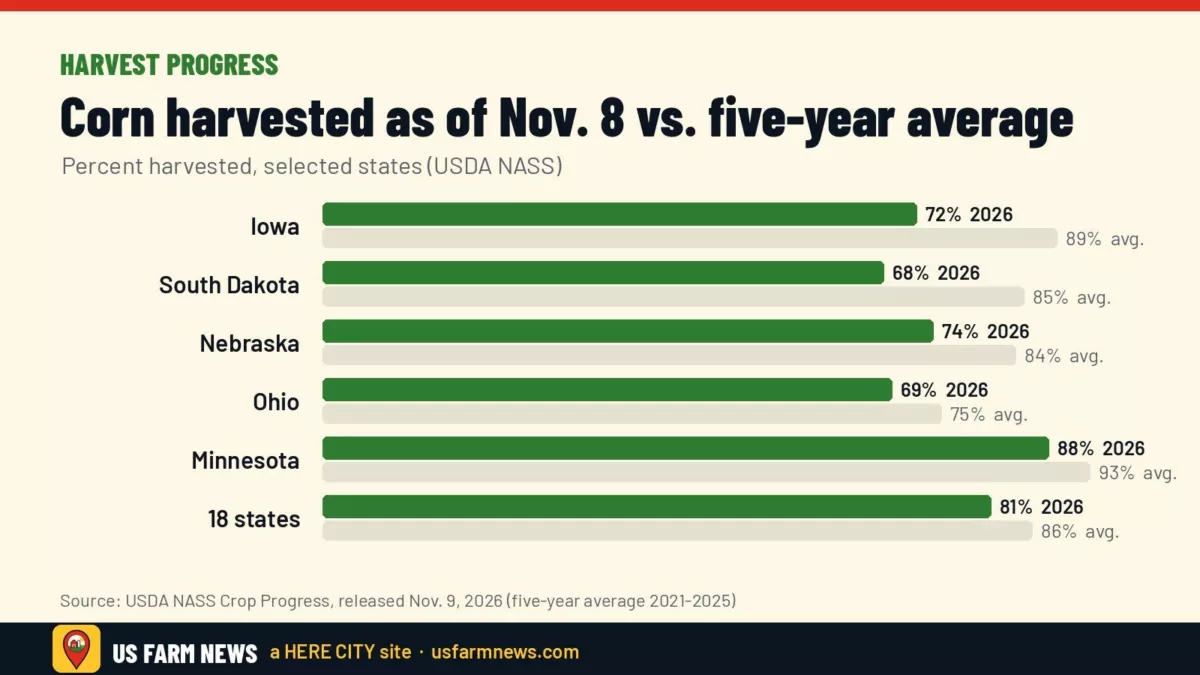
- Iowa had 72% of its corn harvested as of Nov. 8, versus a five-year average of 89%; South Dakota and Nebraska were also well behind, USDA said.
- For corn and soybeans insured as grain, federal crop insurance coverage generally ends on Dec. 10, according to USDA’s Risk Management Agency.
- Report damage to your agent within 72 hours of finding it; the last possible notice date is 15 days after coverage ends.
- Call your agent before harvesting damaged fields, leave check strips if asked, and document everything.
A wet fall has left a lot of corn standing in the western Corn Belt with a month to go before a key crop insurance date. If you farm in Iowa, South Dakota, Nebraska or Ohio and still have fields to shell, now is the time to check your policy duties, not after the combine rolls.
Where the harvest stands
USDA’s National Agricultural Statistics Service said Monday that 81% of the U.S. corn crop was harvested as of Nov. 8, behind the five-year average of 86%. Soybeans were 92% done, a point ahead of normal. The lag is concentrated in a few states:
- Iowa: 72% harvested vs. 89% average
- South Dakota: 68% vs. 85%
- Nebraska: 74% vs. 84%
- Ohio: 69% vs. 75%
- Minnesota: 88% vs. 93%
Northwest Iowa farmer Brent Swart told Brownfield Ag News that he got more than 9 inches of rain in September and that harvest has been “very long and challenging.” DTN Ag Meteorologist John Baranick said fieldwork conditions look favorable early this week ahead of scattered showers and a brief cold snap in the eastern U.S. from midweek on.
Date to circle: Dec. 10
Under RMA’s coarse grains rules, coverage for corn insured as grain, grain sorghum and soybeans stops at whichever comes first: the unit is harvested, the crop is destroyed or abandoned, the loss is finally adjusted, or Dec. 10, the calendar date that applies in nearly every state. A few counties in south Texas and eastern Washington have different dates, the agency’s fact sheet says. Corn insured as silage has earlier dates.
That does not mean every bushel must be in the bin by Dec. 10. It means coverage stops on that date, and your notice deadlines are tied to it. If wet fields are going to push you past that date, contact your agent now about what the policy requires.
Your duties if there’s damage
RMA’s fact sheet lists four main responsibilities when a loss occurs:
- Protect the crop from further damage by giving it adequate care.
- Notify your agent within three days (72 hours) of first spotting damage. The outside limit is 15 days past the date coverage ends.
- Leave representative samples in each field of the damaged unit if the adjuster needs them.
- Tell your agent before harvest if you plan to harvest differently than reported, such as chopping corn for silage instead of shelling it.
Iowa State University Extension and Outreach added practical advice in a September article: ask your agent whether your policy has harvest guidelines or reporting rules, and know that an adjuster may need to inspect a crop before harvest begins. Some quality losses, including low test weight, ear molds and mycotoxins, sprouting and lodging, may have to be documented and adjusted before harvest, the article said, and waiting can limit your ability to prove the loss.
Paperwork that protects a claim
Iowa State recommends photos or video of standing water, lodged stalks, stalk rot or ear rot, plus organized records including grain settlement sheets, moisture readings, yield monitor files, the dates each field was harvested and your own notes.
If you carry private hail coverage on top of a federal policy, read it too. Iowa State said many farmers don’t realize their hail policy may include Extra Harvest Expense coverage, which can pay up to about 8% of the hail coverage amount when crop damage causes added harvest costs, for example with downed corn.
How the price side works this year
For revenue protection policies, this year’s harvest prices were set at $4.75 for corn and $12.63 for soybeans, above spring projected prices, University of Illinois farmdoc economists reported. That raised revenue guarantees but also makes claims depend more on yield. Our explainer on 2026 harvest prices and claims walks through the math. If you hold harvested grain while finishing, see our storage break-even guide.
Frequently asked questions
When does crop insurance coverage end for corn harvested as grain?
In nearly every state, coverage for grain corn, grain sorghum and soybeans runs no later than Dec. 10, or sooner if the unit is harvested, destroyed, abandoned or the loss is finally adjusted, according to RMA.
How quickly must I report crop damage?
RMA and Iowa State University Extension say to notify your agent within 72 hours of first spotting damage; the final cutoff is 15 days after coverage ends.
Can I chop damaged corn for silage?
Tell your crop insurance agent before you start. RMA requires notice before harvest if you plan to harvest in a way other than what you reported, such as corn for grain taken as silage.
This article is general information, not legal, tax, or financial advice. Your policy, crop provisions and special provisions control; confirm dates and duties with your crop insurance agent.
Get the Daily Ag Business Briefing
Markets, policy and farm business in one free email each weekday.