A HERE CITY site

Dealers Cleared Old Used Stock in 2026: What Winter Buyers of Used Tractors and Combines Should Check Before Signing
Titan Machinery cut used inventory by $59 million this year as ag sales fell 13.1%. With winter the peak used-buying season, here are 7 checks before you buy.
Key takeaways
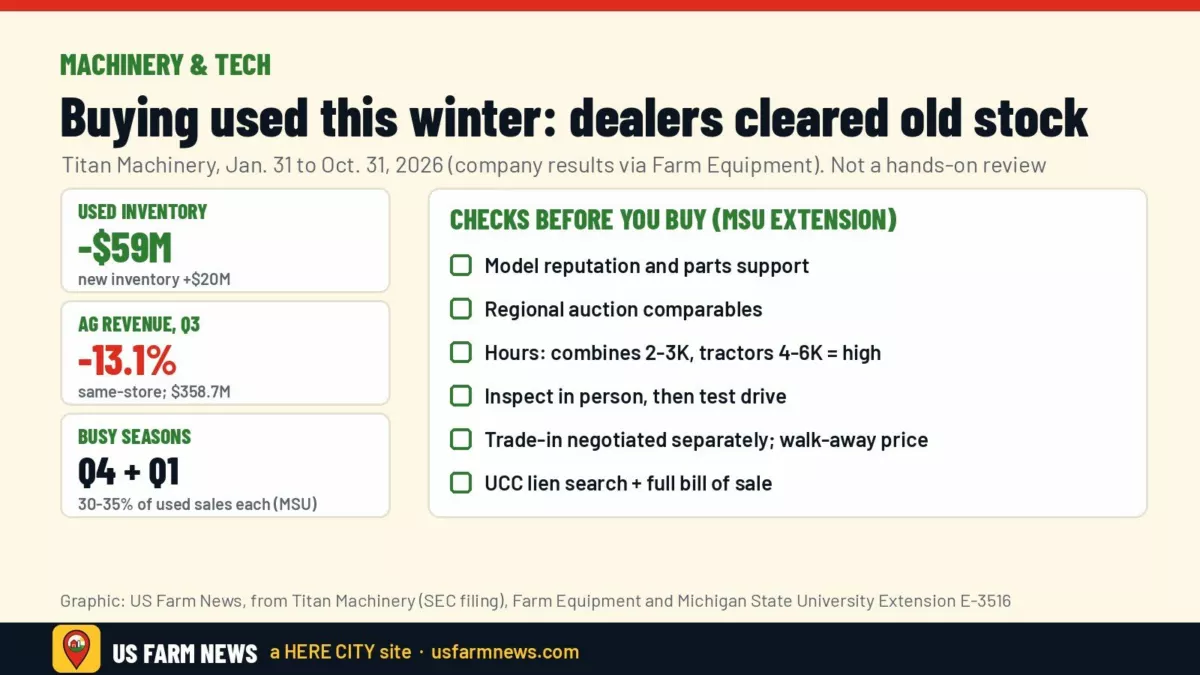
- Titan Machinery, a CNH dealership group, cut its used equipment inventory by about $59 million between Jan. 31 and Oct. 31, Farm Equipment reported. New inventory rose about $20 million over the same stretch.
- Titan’s ag revenue fell to $358.7 million in its fiscal third quarter, down from $420.9 million a year earlier. Same-store sales were down 13.1%, which the company blamed on pressure on grower profits.
- Michigan State University Extension says roughly 30% to 35% of used equipment sales happen in each of the fourth and first quarters. That makes winter the busy season.
- Before buying, MSU suggests researching auction comparables, inspecting in person, negotiating any trade-in separately and running a UCC lien search.
Farm equipment dealers have spent 2026 clearing out older machines, and that shapes what buyers will find on used lots this winter. Titan Machinery, a CNH dealership group, said on Nov. 24 that cleaner inventory had helped push its equipment margins back up even as sales fell. Over the first nine months of its fiscal year, the dealer group cut used inventory by about $59 million while adding about $20 million in new machines, Farm Equipment reported.
For a farmer shopping for a used combine, tractor or planter before spring, that cuts both ways. Older machines that sat on lots have been moving out. What’s left, according to Titan’s CEO, is “fresher equipment,” and fresher stock doesn’t mean deeper discounts.
This article summarizes published company results and extension guidance. It isn’t a hands-on review of any machine.
What Titan’s quarter says about the market
- Total revenue: $545.7 million in the quarter ended Oct. 31, down from $644.5 million a year earlier.
- Agriculture segment: $358.7 million, down from $420.9 million. Same-store sales were down 13.1%, which the company tied to weaker equipment demand as growers’ profits stayed under pressure.
- Gross margin: 19.7%, up from 17.2%. Titan credited fewer aged machines in inventory and more parts and service revenue.
- Equipment inventory: $686.5 million, down $38.7 million since Jan. 31.
- Outlook: Titan now expects fiscal 2027 ag revenue to fall 10% to 15%. Its earlier forecast was a 15% to 20% drop.
CEO Bryan Knutson said in the release that the late-summer bump in commodity prices “was short-lived” and that farm economics are still weighing on purchases. In an analysis quoted by Farm Equipment, analyst Jon Rossi said the quarter shows dealers protecting earnings by clearing old stock, cutting carrying costs and relying on parts and service.
Why winter is the busy season for used machinery
A July 2026 Michigan State University Extension guide by Jonathan LaPorte says monthly used-equipment sales numbers aren’t published, but auction volumes, dealer comments and sales reports all point the same way. Roughly 30% to 35% of used sales happen from October through December, and another 30% to 35% from January through March. Fall buying follows harvest and year-end tax planning. Late-winter buying is about having equipment ready for planting.
According to the MSU guide, falling commodity prices or rising interest rates usually make farmers more cautious and push them toward used equipment over new. That fits what Titan described.
Seven checks before you buy used this winter
- Research the model’s reputation and parts support. MSU says to look for known problems with a model year and to make sure parts are still available, especially for discontinued or short-run models.
- Pull auction comparables. Use recent sale prices for the same model and similar hours from your region to set a market value. MSU notes that machines needing big repairs usually sell at a discount, though the discount may not cover the real repair cost.
- Know what counts as high hours. MSU’s rule of thumb puts high hours at about 2,000 to 3,000 for combines and 4,000 to 6,000 for tractors. Past that point, an engine, transmission or rotor job may be coming.
- Inspect in person, then run it. Go through the frame and welds, hydraulics, drivetrain, electrical system and displays before a test drive. If you’re buying online from far away, MSU warns that what arrives may not match the listing.
- Negotiate the trade-in separately. MSU warns about “number masking,” where discounts or a higher price on the replacement machine hide what you’re really getting for your trade.
- Set a walk-away price. Add hauling, filters, fluids and the repairs you found in inspection to the purchase price. Then check that your operating budget can cover the total.
- Run a lien search and get a proper bill of sale. MSU recommends a Uniform Commercial Code search with the Secretary of State, since blanket liens on farm assets are common. The bill of sale should list the serial number, hours, price and an “as-is” statement, plus the seller’s statement that the machine is free of liens.
Timing and taxes
If you’re buying before Dec. 31 for a tax deduction, talk with your tax preparer first. Our year-end tax planning guide covers Section 179 and bonus depreciation. For recent prices, see our report on used tractor and planter auction values and Deere’s 2027 outlook and inventory picture. More equipment coverage is in Machinery & Tech.
What to watch
- Titan’s fiscal fourth quarter, which ends Jan. 31, and whether used inventory keeps falling.
- Winter consignment auctions, where MSU says the first-quarter rush begins.
- Grain prices and interest rates, the two forces MSU names as the main swing factors in new vs. used demand.
Frequently asked questions
When is the busiest time to buy used farm equipment?
Michigan State University Extension estimates that about 30% to 35% of used equipment sales fall in October through December and another 30% to 35% in January through March.
How many hours is too many on a used combine or tractor?
MSU Extension’s rule of thumb treats about 2,000 to 3,000 hours as high for combines and 4,000 to 6,000 hours for tractors. Condition and service records still matter.
How do I check whether a used machine has a lien on it?
MSU suggests asking the seller, reviewing the seller’s purchase records and running a UCC search with the Secretary of State. If there’s a lien, the seller needs to get a lien waiver.
Get the Daily Ag Business Briefing
Markets, policy and farm business in one free email each weekday.