A HERE CITY site

Judge Declares USDA’s Race- and Sex-Based ‘Socially Disadvantaged’ Farm Preferences Unconstitutional in Texas Farm Bureau Case
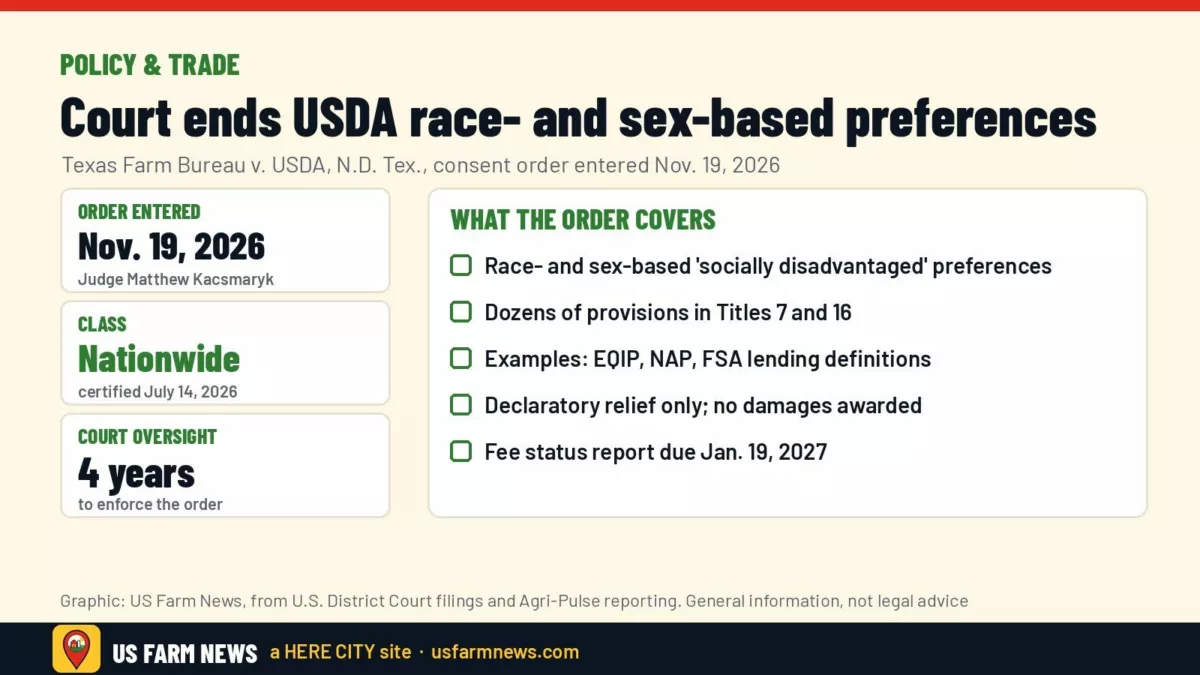
A Nov. 19 consent order bars USDA's race- and sex-based 'socially disadvantaged' preferences across dozens of laws, including EQIP, NAP and FSA lending rules.
Key takeaways
- A federal judge in Amarillo, Texas, entered a consent order on Nov. 19 declaring that USDA programs giving preferences to “socially disadvantaged” farmers based on race or sex are unconstitutional.
- USDA agreed to the order, which settles a class action filed by the Texas Farm Bureau and two Texas producers in August 2025.
- The ruling covers dozens of provisions in Titles 7 and 16 of the U.S. Code, including the definitions used in EQIP, the NAP disaster program and FSA lending.
- The court keeps jurisdiction for four years to enforce the order; a status report on attorneys’ fees is due by Jan. 19, 2027.
USDA can no longer use race or sex to decide who gets extra help in a long list of farm programs, under a court order entered last week in a case brought by the Texas Farm Bureau. U.S. District Judge Matthew Kacsmaryk of the Northern District of Texas approved the consent order on Nov. 19, declaring that statutory preferences for “socially disadvantaged” farmers and ranchers, when based on race- and sex-based classifications, violate the equal protection guarantee in the Fifth Amendment’s Due Process Clause. Agri-Pulse reported the decision on Wednesday.
The order is a declaratory judgment that both sides asked for. It doesn’t award damages, but it is binding on USDA and sets the rule for how conservation, disaster and lending programs treat applicants going forward.
How the case got here
Texas producers Mark Cadra and Timothy Assiter filed the suit with the Texas Farm Bureau on Aug. 8, 2025, according to the court’s memorandum opinion. Agri-Pulse described both men as white, non-beginning farmers. They challenged every USDA program that used the “socially disadvantaged” label to give some farmers more favorable terms.
USDA did not defend the programs. In February 2026, the department told the court it agreed the programs were unconstitutional to the extent they included race or sex preferences, pointing to a letter from Solicitor General D. John Sauer. In July the judge certified a nationwide class covering farmers and ranchers who are, or will be, shut out of benefits or programs because they don’t qualify for the “socially disadvantaged” designation. The parties filed a joint motion for the consent order in September, and the judge held a hearing on Nov. 19 before approving it.
Kacsmaryk had already ruled against similar preferences. In the 2024 case Strickland v. USDA, he found that preferences in pandemic and disaster relief programs were likely unconstitutional, and he cited that case in this one, Agri-Pulse reported. USDA rescinded regulations that implemented some of the preferences in July 2025, the consent order notes.
Which programs are covered
The order lists dozens of sections of the U.S. Code in Titles 7 and 16, plus their regulations. Two examples it spells out:
- EQIP: the Environmental Quality Incentives Program defined socially disadvantaged producers by racial or ethnic group membership.
- NAP: the Noninsured Crop Disaster Assistance Program’s regulations also named women as a socially disadvantaged group.
The order also cites the definition in the farm lending section of the code, 7 U.S.C. § 2003, which includes women. Its declarations reach only classifications based on race and sex. The order doesn’t address other categories USDA uses, such as beginning, veteran or limited-resource farmers. We covered the separate benefits for veteran farmers earlier this month.
What it means for producers
- Applying for EQIP, NAP or an FSA loan: the order binds USDA, so race- and sex-based categories under the listed provisions should no longer factor into how applications are treated. Ask your FSA or NRCS county office how pending applications will be handled.
- Damages are not part of the class settlement. The class release covers only the claims for declaratory and injunctive relief. The two named plaintiffs gave up their own claims; other class members did not.
- Enforcement: before claiming USDA is in breach, plaintiffs must notify the department in writing and give it 30 days to fix the problem.
This is general information about a court ruling, not legal advice. Talk with your county office or an attorney about your situation.
What to watch
USDA has agreed it won’t contest the plaintiffs’ status as prevailing parties for attorneys’ fees, and the parties must report on fees by Jan. 19, 2027. Congress could also take up the statutory definitions in a farm bill. See our latest on where lame-duck farm bill talks stand.
Get the Daily Ag Business Briefing
Markets, policy and farm business in one free email each weekday.