A HERE CITY site

Should your pivot run on propane? The fuel-cost, grid and rebate case for 2027
Propane has stayed steady while diesel spiked and utilities restricted peak-hour power. Here's why some irrigators are switching engines, and how to run the numbers on your own farm.
Key takeaways
- Farm propane was running in the “buck-and-a-half range,” according to PERC’s Mike Newland, and prices have stayed stable while other fuels jumped.
- Propane engines avoid fuel aging, spill containment and grid demand charges or peak-hour limits on electric pumps.
- PERC’s Propane Farm Research Program offers producers “up to $10,000 or more” for reporting first-year performance data.
- Run your own numbers: fuel per acre-inch, local contract prices vs. diesel or electric demand charges, engine cost minus incentives.
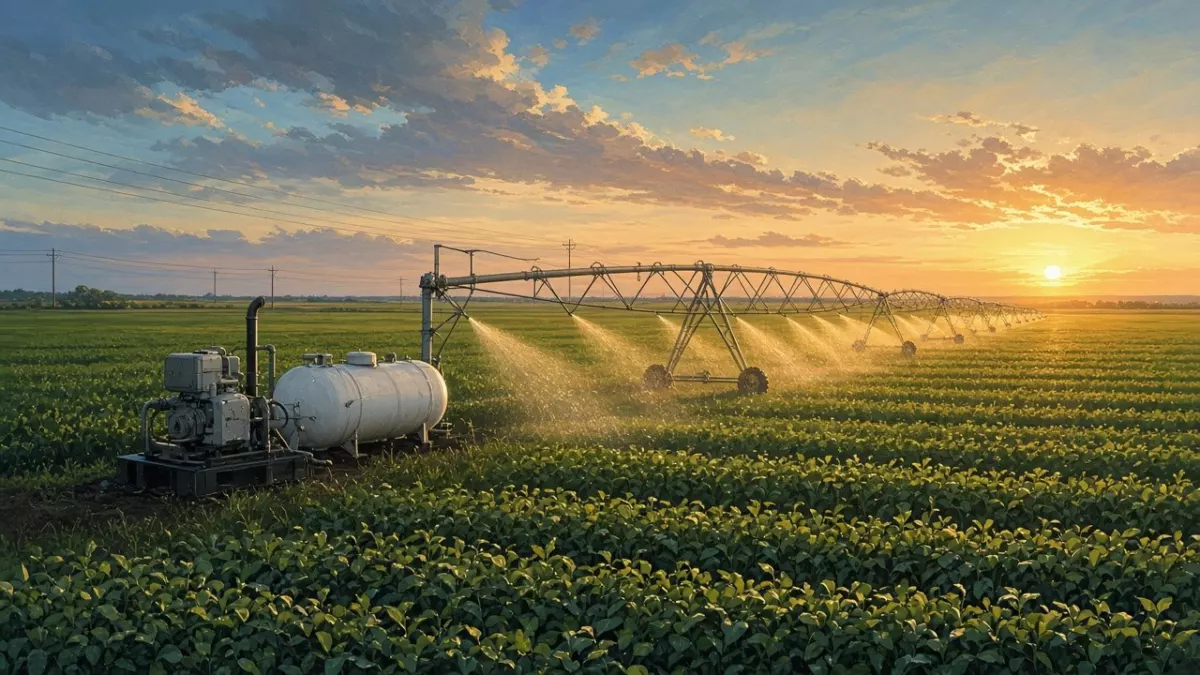
The pivots are parked and the combines are rolling, but the cheapest time to rethink next summer’s irrigation bill is now. With diesel volatile this year and some utilities limiting power during peak hours, more irrigators are looking at propane-fueled engines for their wells and pivots.
The fuel-cost case
Mike Newland, who leads agriculture business development for the Propane Education & Research Council (PERC), told Farm Progress at Husker Harvest Days that farm propane was running in the “buck-and-a-half range.” He said one farmer with two diesel engines had already done the math. “I can pay for them quickly by the fuel savings alone,” the farmer told him. Newland added that propane prices have been “very stable,” up only “a few pennies” while other fuels jumped. With December crude oil settling above $100 a barrel this week, that gap is the headline number.
Supply is another part of the argument. Newland said U.S. propane production keeps growing each year, with exports taking about 65% of the country’s supply.
Beyond price: storage, grid and hassle
- No fuel aging. Propane doesn’t degrade in storage. “If you fill your tank and for some reason it rains all year in Nebraska and you don’t run your pivot, that fuel is going to be ready to go,” Newland said.
- No spill containment. Newland said propane is nontoxic to water and air, so storage needs no containment.
- Off the grid when it counts. Some utilities charge steep demand fees or restrict irrigation during peak hours, which is exactly when a crop needs water. Newland said “dozens of generators” were sold this year to run electric irrigation pumps.
- Automatic refills. Tank sensors can alert the supplier when fuel runs low, so there’s one less call to make in July.
- Simpler emissions systems. Newland said propane engines don’t need the after-treatment sensors that have caused downtime on some diesel units.
How to switch
- Find a supplier first. PERC says more than 800,000 U.S. farms already use propane. If you don’t, its website has a ZIP-code search for local marketers. A good supplier can also help you lock in a price.
- Pick an engine. Husker Power Products and Reliable Horsepower of Hastings, Neb., showed propane irrigation engines at Husker Harvest Days, and other manufacturers offer them too.
- Apply for incentives. PERC’s Propane Farm Research Program says producers can earn “up to $10,000 or more” for documenting how qualifying propane equipment performs. Newland said the program pays the farmer directly by check in exchange for the first year’s data: hours, gallons and the farmer’s assessment. Also look at USDA’s Rural Energy for America Program (REAP) and state incentive programs.
Run your own numbers
A switch only pays if the math works on your farm. Compare gallons per acre-inch, your local propane contract price against diesel or your electric rate including demand charges, engine cost minus incentives, and expected hours. Farms with high demand charges, limited three-phase power or remote wells are the likeliest candidates.
Frequently asked questions
How much does farm propane cost for irrigation?
PERC’s Mike Newland told Farm Progress that farm propane was running in the buck-and-a-half range, and that prices have stayed stable while other fuels rose. Local contract prices vary, so get a quote from a supplier.
Are there rebates for propane irrigation engines?
Yes. PERC’s Propane Farm Research Program says producers can earn up to $10,000 or more for documenting how qualifying propane equipment performs, paid directly to the farmer for first-year data. Also check USDA REAP and state programs.
Why are some irrigators switching from electric pumps to propane?
Some utilities charge steep demand fees or restrict irrigation during peak hours, when crops most need water. Propane engines run independently of the grid.
Get the Daily Ag Business Briefing
Markets, policy and farm business in one free email each weekday.