A HERE CITY site

Holding Unpriced Grain? How a USDA Marketing Loan Works: $2.42 Corn, $6.82 Soybeans, 5.5% Interest
USDA marketing loans pay $2.42 a bushel on 2026 corn and $6.82 on soybeans at 5.5% interest. Here's what holding grain costs and how to apply by the deadline.
Key takeaways
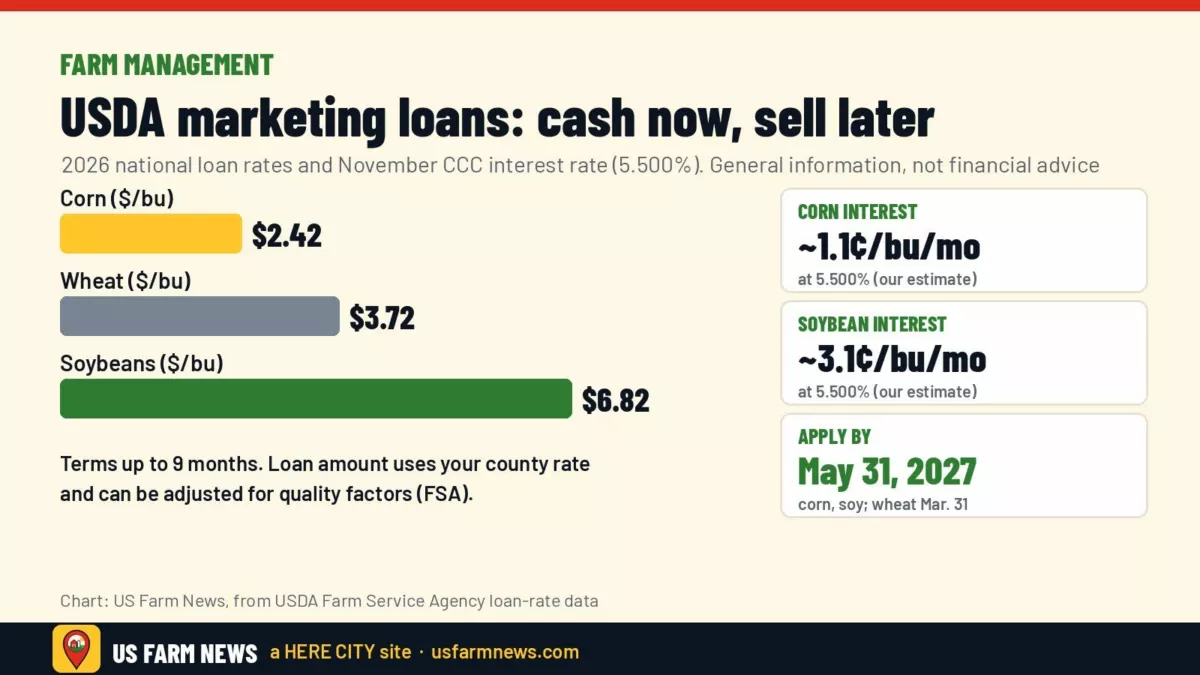
- A USDA marketing assistance loan (MAL) lets you borrow against stored grain at harvest instead of selling it. 2026 national loan rates are $2.42 a bushel for corn, $6.82 for soybeans and $3.72 for wheat.
- November’s interest rate on Commodity Credit Corporation loans is 5.500%. At that rate, carrying a corn loan costs a little over 1 cent per bushel per month and a soybean loan about 3 cents.
- Loans run up to nine months. Apply by May 31, 2027 for 2026 corn, sorghum and soybeans, or March 31, 2027 for wheat, barley, oats and canola.
- General information, not legal, tax or financial advice. Confirm your county rate and eligibility with your FSA office.
With corn and soybean basis weak and many farmers unwilling to sell at current prices, the bins are full and the bills are still due. AgMarket co-founder Matt Bennett told Southern Farm Network on Nov. 23 that, judging by basis across the Corn Belt, many producers have essentially shut their bin doors. DTN’s national average basis on Friday, Nov. 20, was 30 cents under December futures for corn and 57 cents under for soybeans. One low-cost way to cover cash needs while you wait is a marketing assistance loan from USDA’s Farm Service Agency (FSA). Here is how it works and what it costs.
What a marketing loan is
FSA describes MALs as interim financing: you pledge harvested grain as collateral, receive cash now and put off the sale until you choose to market it. The money comes from the Commodity Credit Corporation (CCC) and is run through FSA county offices. The One Big Beautiful Bill Act, which USDA also calls the Working Families Tax Cuts Act, raised loan rates for every eligible commodity starting with 2026 crops and extended the program through crop year 2031, the agency says.
2026 national loan rates
- Corn and grain sorghum: $2.42 per bushel
- Soybeans: $6.82 per bushel
- Wheat: $3.72 per bushel
- Barley $2.75 and oats $2.20, both per bushel
- Canola, sunflower and other oilseeds: $11.10 per hundredweight
Those are national averages. Your loan is figured on your county’s rate, and FSA says the amount can be adjusted for some quality factors. County rates are posted on the FSA website.
What it costs: the math
The loan is a fraction of the grain’s market value. With December corn at $4.34¼ at Monday’s close, according to Brownfield, and DTN’s national cash corn index at $4.05 on Friday, a $2.42 loan covers about 60% of the cash value. Using the national rates and November’s 5.500% CCC interest rate, simple-interest estimates look like this:
- 10,000 bushels of corn: $24,200 in loan proceeds. Interest runs about $111 a month, or roughly 1.1 cents a bushel.
- 5,000 bushels of soybeans: $34,100 in proceeds. Interest is about $156 a month, or roughly 3.1 cents a bushel.
- Six months on corn: about 6.7 cents a bushel in interest; on soybeans, about 18.8 cents.
FSA announces its loan interest rates each month, so check the current figure before you sign. Compare that carrying cost with your own storage, shrink and handling expenses using our grain storage break-even guide; holding only pays if the expected gain in price or basis beats the total.
How to get one: step by step
- Confirm eligibility. FSA requires that you meet conservation and wetland protection rules and can document the commodity you are pledging.
- Know your deadline. Loans for 2026 corn, sorghum, soybeans, sunflower, safflower and mustard seed are available through May 31, 2027. For 2026 wheat, barley, oats, canola, flaxseed, crambe, rapeseed and sesame, the cutoff is March 31, 2027, according to FSA’s April rate announcement.
- Apply at your county FSA office with production records and the paperwork your office asks for.
- Plan the exit. Terms run up to nine months. FSA says you can repay principal plus interest, repay at the posted county price or alternative repayment rate when that is below the loan rate, or forfeit the grain to CCC at maturity as full payment.
- Keep the grain in condition. The bushels are the collateral for the loan, so protect their quality until the loan is settled. Ask your county office how to handle a sale while the loan is open.
The tax wrinkle
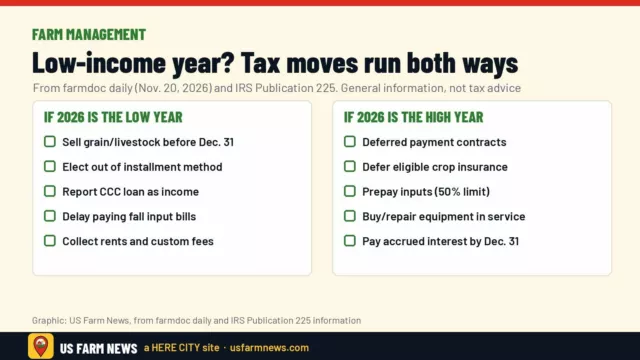
IRS Publication 225 says loans normally are not income, but farmers can elect to treat a marketing loan as a sale and report the proceeds as income in the year received. Once you choose that method, you generally must use it for all later marketing loans unless you get IRS consent to switch. That election can help in a low-income year, as we explained in our 2026 tax planning guide. Talk with your tax preparer before Dec. 31.
Frequently asked questions
How much can I borrow on corn?
The 2026 national rate is $2.42 a bushel, so 10,000 bushels would bring about $24,200. Your county rate and grain quality set the exact amount.
What interest rate applies?
FSA’s rate for CCC commodity loans was 5.500% in November 2026. FSA announces new rates each month, so confirm the current one with your county office.
When is the last day to apply?
May 31, 2027 for 2026 corn, sorghum and soybeans, and March 31, 2027 for 2026 wheat, barley, oats and canola.
This article is general information, not legal, tax or financial advice. Program rules and rates can change; check with your local FSA office and a qualified adviser.
Get the Daily Ag Business Briefing
Markets, policy and farm business in one free email each weekday.