A HERE CITY site

USDA’s $472.5 million food buy: dairy leads, but pulses, nuts, citrus and rice get a lift
USDA will use Section 32 to buy up to $472.5 million in U.S. food for nutrition programs. Here's the commodity-by-commodity breakdown and what it means for growers.
Key takeaways
- USDA plans to buy up to $472.5 million of U.S. food under Section 32 for food banks and nutrition programs (announced Oct. 29, 2026).
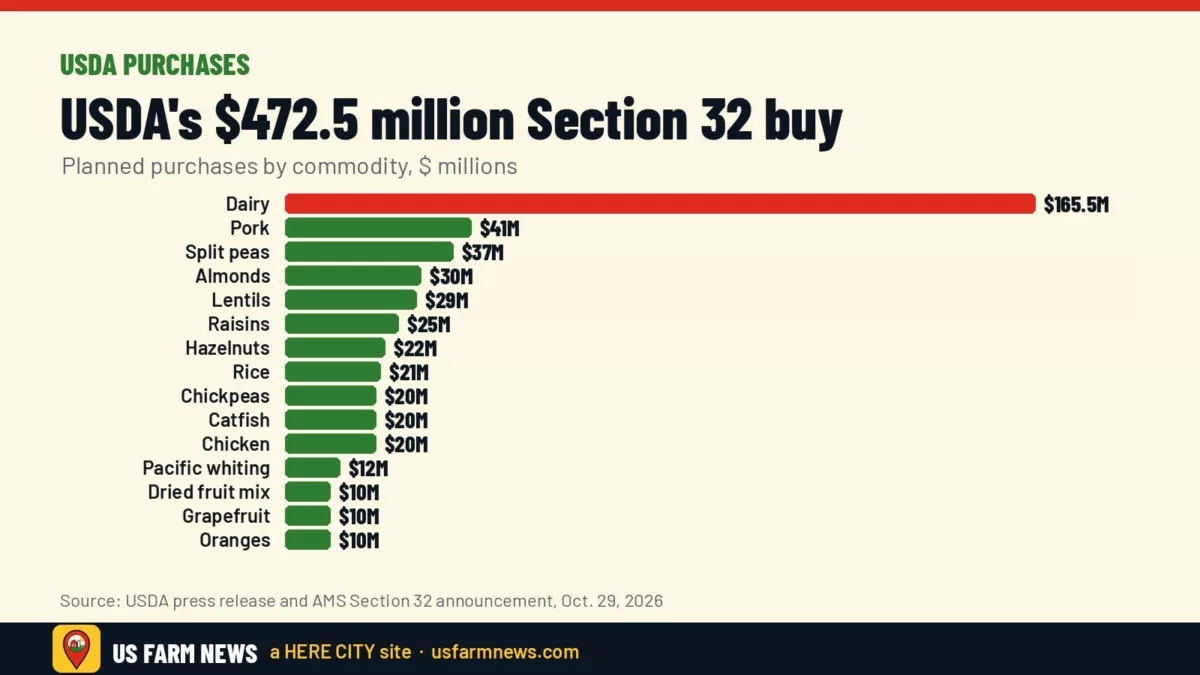
- Dairy gets the largest share at $165.5 million, followed by pork ($41M), split peas ($37M), almonds ($30M) and lentils ($29M).
- Specialty sectors (pulses, tree nuts, raisins, citrus, rice and catfish) are named; rice’s $21 million followed an industry request.
- Purchases this size won’t reset big markets, but they can clear inventory in thin ones. Bids go through USDA’s WBSCM system.
USDA says it will buy up to $472.5 million of American-grown and American-raised food and send it to food banks and other nutrition programs. Dairy, pulses, tree nuts, citrus, rice, catfish, pork and poultry all get a share. For several of those sectors the purchase is a modest but welcome outlet at a time when prices are not covering costs.
The Oct. 29 announcement uses Section 32, a 1935 authority funded by a share of U.S. customs receipts. It lets the department buy surplus commodities when markets are out of balance. Agriculture Secretary Brooke Rollins said the money “moves American milk, cheese, lentils, almonds, rice, catfish, and more, straight from our farms to those in need.”
Who gets what
USDA’s Agricultural Marketing Service listed the planned purchases:
| Commodity | Planned purchase |
|---|---|
| Dairy products | $165.5 million |
| Pork | $41 million |
| Split peas | $37 million |
| Almonds | $30 million |
| Lentils | $29 million |
| Raisins | $25 million |
| Hazelnuts | $22 million |
| Long-grain rice | $21 million |
| Chickpeas | $20 million |
| Farm-raised catfish | $20 million |
| Chicken | $20 million |
| Pacific whiting | $12 million |
| Dried fruit mix | $10 million |
| Grapefruit | $10 million |
| Oranges | $10 million |
Dairy alone accounts for more than a third of the total. For specialty growers, the list matters even more than the headline number. Chickpea, lentil and split-pea growers from the Dakotas and Montana to Washington and Idaho, California almond and raisin producers, Oregon hazelnut growers, Florida and Texas citrus and Southern catfish farms are all named.
Rice asked, and got its piece
The $21 million for rice followed a request from the industry. “There’s still a lot of carryover stocks with rice, and there’s ample supplies,” Jake Westlin of the USA Rice Federation told Brownfield Ag News. He said growers are squeezed by “the high cost of production, along with foreign rice continuing to penetrate our market.” He added that the rebound in prices over the past few months still doesn’t cover what it costs to grow the crop.
USA Rice noted that USDA used Section 32 to buy about $730 million of food in fiscal 2026 for programs like The Emergency Food Assistance Program (TEFAP). Feeding America, the national food bank network, said more than 20% of the food its members distribute comes through TEFAP.
What it means for prices
Don’t expect a purchase this size to reset a market by itself. The $165.5 million for dairy is small next to a U.S. dairy industry with tens of billions of dollars in annual milk sales. But targeted buys can clear inventory in thin markets, like rice, pulses, hazelnuts and raisins, where a few million pounds can change the tone of the trade. They also send a signal that USDA is willing to act when prices sag.
Solicitations will be posted through USDA’s Web-Based Supply Chain Management (WBSCM) system. Contracts are expected to be firm-fixed-price, and products must be grown and processed in the United States. Processors and co-ops that want to bid should watch the AMS purchase pages.
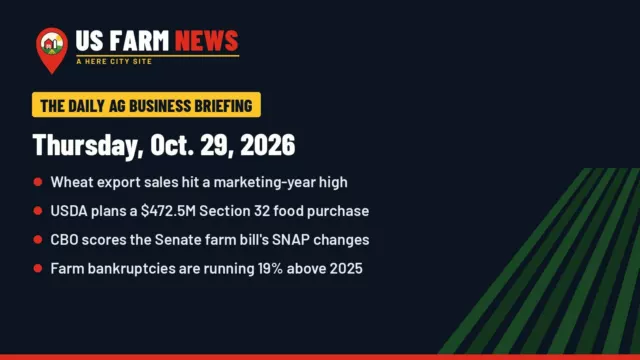
Related: the purchase leads today’s Daily Ag Business Briefing.
Get the Daily Ag Business Briefing
Markets, policy and farm business in one free email each weekday.